Orthokeratology overnight lenses are a modern method for correcting myopia and astigmatism, used by patients of all ages. They provide clear vision throughout the day without glasses or soft contact lenses, and also help slow the progression of myopia by influencing eye growth.
Orthokeratology lenses work by temporarily reshaping the cornea overnight. Rigid gas-permeable lenses gently redistribute the corneal epithelial layers from the center to the periphery, forming a new optical surface.
This change improves retinal focus while simultaneously creating peripheral “myopic defocus.” This mechanism plays a key role in slowing eye growth and, consequently, the progression of myopia.
This effect lasts throughout the day, so the patient does not require additional vision correction. To achieve stable results, the lenses must be worn for 8-10 hours each night. Decreased sleep duration or irregular use may reduce the effectiveness of the method.
Who are orthokeratology lenses suitable for?
Orthokeratology is used in various clinical situations and can be recommended for patients with different vision correction goals.
It is primarily suitable for children and adolescents with progressive myopia. In such cases, it is important not only to improve vision but also to slow the progression of myopia with regular lens use and follow-up with a doctor.
Orthokeratology lenses are also suitable for active adults who do not want to wear glasses or soft contact lenses during the day. This is especially convenient for sports, active work, and prolonged visual strain.
This method is used for patients with myopia and some forms of astigmatism. The possibility of correction depends on the parameters of the cornea and is determined after diagnosis.
A separate group includes patients who are contraindicated for refractive surgery or who are not ready for the procedure. In such cases, orthokeratology is considered a reversible and safe alternative.
For what diopters and types of astigmatism are orthokeratology lenses most effective?
The effectiveness of orthokeratology depends on the degree of myopia and corneal parameters. The fastest and most predictable results are achieved with values up to -3.00 to -4.00 diopters—in these cases, vision often improves after the first nights of use.
With values up to -5.00 to -7.00 diopters, the method remains effective, but the results are gradual and require more precise adjustment.
Orthokeratology lenses are especially useful for patients with moderate to severe myopia. With values less than -1.00 diopters, vision improvement can be noticeable after the first night. With higher myopia, such as around -4.00 diopters, especially when combined with astigmatism, several days of regular use may be required to achieve stable results.
In cases of higher myopia, partial correction is possible, sometimes with additional optical support. Regarding astigmatism, the best results are achieved with regular shapes. In complex or irregular cases, selection is individualized, and the effect may be less pronounced.
The final decision is made after diagnosis, taking into account the corneal geometry and the individual eye’s response to correction.
How does a consultation about night lenses work at Visus Clinic?

Fitting orthokeratology lenses is a step-by-step medical process that allows for precise adaptation of the correction to the eye’s parameters and a predictable result.
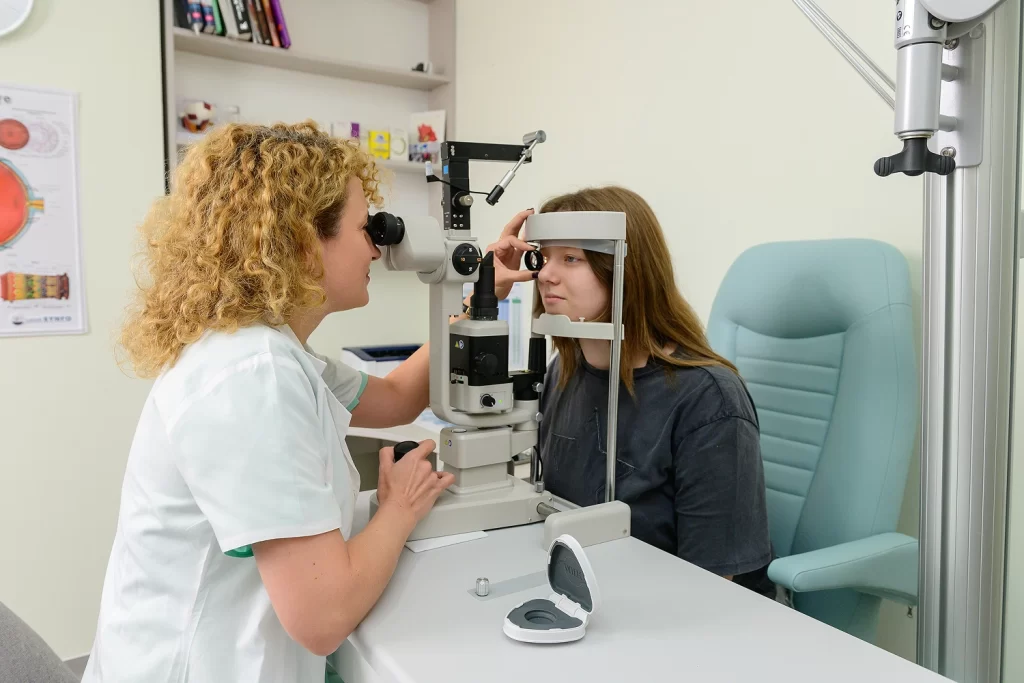
The consultation begins with an examination by an ophthalmologist. The doctor assesses the eye condition, clarifies the patient’s complaints, and determines whether orthokeratology is appropriate for the individual case.
Next, corneal topography is performed—a key test that allows for an accurate map of the corneal surface. This is necessary for selecting the correct lens geometry. After this, additional measurements are taken, including refraction and other parameters that influence the effectiveness of the correction.
Based on these data, the lenses are selected and an initial fitting is performed. The next stage is the adaptation period. After the first night of wear, the patient returns for a follow-up examination, where the results are assessed and adjustments are made if necessary.
Furthermore, the patient undergoes regular checkups at Visus Clinic to monitor the stability of the effect and the safety of use.
Want to learn more?
Watch the video – Dr. Olena Palii explains how orthokeratology works and who it’s suitable for →
How long does it take for results to appear?
After the first night of use, most patients report a noticeable improvement in vision. For low to moderate myopia, the results can be quite noticeable as early as the next day.
Over the following days, the correction gradually increases. This is due to the cornea adapting to the lens and forming a stable optical surface.
The speed at which results are achieved may vary. Patients with mild myopia achieve results more quickly, while those with higher myopia or astigmatism require more time and more precise adjustment.
Stable vision is typically achieved within one week of regular use. During this period, it is important to maintain a consistent wearing schedule and attend follow-up appointments to adjust the lens parameters if necessary.
What sensations do lenses cause and how does adaptation occur?
Sensation is one of the most common issues. During the first few days of use, you may feel a slight discomfort when inserting the lenses, which is a normal reaction to the rigid, gas-permeable surface. This discomfort is usually short-lived and subsides within a few minutes. It is generally not felt during sleep.
The adaptation period lasts from a few days to one to two weeks. During this time, the eye adjusts, and the sensations become minimal or disappear completely.
During the first few nights, the following are normal:
- mild discomfort when inserting the lenses
- a foreign body sensation for the first few minutes
- minor visual instability in the morning
You should consult a doctor if you experience:
- pain
- severe redness
- impaired vision
- severe or increasing discomfort
These symptoms are not normal and require evaluation by a specialist.
Safety, Hygiene, and Regular Examinations

Orthokeratology lenses are a safe correction method when used correctly and under medical supervision. Maintaining proper hygiene remains key.
The lenses are worn overnight and remain in contact with the eye surface for extended periods, so it’s important to clean them daily, use recommended solutions, and strictly follow care instructions. Failure to follow these instructions significantly increases the risk of inflammation and infection.
Orthokeratology lenses should not be selected or used independently. Fitting requires an accurate diagnosis, and improperly chosen geometry can lead to discomfort and inconsistent results.
Regular eye exams with an ophthalmologist are a mandatory part of follow-up. The doctor monitors the condition of the cornea, evaluates the effectiveness of the correction, and adjusts parameters if necessary. Following the recommendations, proper care, and regular medical monitoring ensure safety and stable results.
When Orthokeratology Lenses Are Not Recommended
Orthokeratology is an effective and safe method, but it is not suitable for all cases. Before starting, it is important to rule out conditions that may limit the use of overnight lenses or require additional preparation.
The main limitations include:
- corneal diseases that affect its shape and the ability to safely correct it
- severe dry eye, which reduces comfort and stability of results
- active inflammatory or infectious processes
- insufficient discipline in care and adherence to recommendations
In such cases, the doctor may postpone fitting, conduct preliminary treatment, or suggest an alternative correction option.
A diagnostic evaluation is always performed before starting to assess the safety of the method and ensure a predictable outcome.
What happens if you don’t wear your lenses for one or more nights
Overnight vision correction is a reversible method: the results are maintained only with regular use. During breaks, vision gradually returns to its original level.
- Skipping one night may result in a slight decrease in vision in the evening.
- A break of several days results in a gradual return to the original myopia.
- The rate of change depends on the parameters of the eye and the degree of myopia.
- During breaks, glasses are recommended.
This feature of the method allows for flexible control of the correction, but requires a consistent wearing schedule for stable results.
Read real patient reviews to see how they went from the first fitting to clear vision every morning →
Advantages of Orthokeratology Lenses
Orthokeratology lenses combine the benefits of several vision correction methods. They provide clear vision throughout the day without the need for glasses or soft contact lenses and do not require surgery.
This method is especially suitable for patients with an active lifestyle, as well as for those who experience discomfort with prolonged wear of soft lenses or are not ready for laser correction.
The main advantages include:
- clear vision without glasses throughout the day
- no need to wear soft contact lenses
- comfort during an active lifestyle and work
- reversibility – the ability to change or discontinue use
- additional control of myopia progression
As a result, the patient not only receives high-quality vision but also more freedom in daily activities without the limitations associated with traditional correction methods.
Multicenter studies conducted over many years confirm the effectiveness of this method in the long-term control of myopia progression. However, the outcome largely depends on adherence to recommendations and regular follow-up with a specialist.
When used correctly, it is a safe and effective correction method, allowing you to achieve stable vision without glasses throughout the day.
Learn more about the lenses we use at Visus Clinic, Paragon, and LCS → https://visus.ro/lentilele-de-noapte-paragon-si-lcs/ and schedule a consultation for a customized fit based on your eye parameters and daily visual stress. We will find a solution that will ensure comfort, stability, and clear vision throughout the day without glasses.
Frequently Asked Questions
- Are orthokeratology lenses suitable for children?
Yes, this method is widely used in children and adolescents, especially for those with progressive myopia. It not only improves vision but also slows its progression with regular eye examinations. - Can astigmatism be corrected?
Yes, orthokeratology lenses can correct some forms of astigmatism. This depends on the type and corneal parameters and is determined after diagnosis. - Is it painful to wear overnight lenses?
No. Mild discomfort is possible during the first few days, but this quickly subsides. The lenses are usually not felt while sleeping. - How long will it take for vision to improve?
Most patients notice improvement after the first night. Stable results develop within 1-2 weeks. - If I stop wearing the lenses, will the effect disappear?
Yes. Orthokeratology is a reversible method, so vision gradually returns to its original state after discontinuing use.
Are contact lenses safe long-term?
Yes, with proper fitting, proper hygiene, and regular eye exams, this method is considered safe and predictable.