Nearsightedness (myopia) is a refractive error in which images are formed in front of the retina rather than on it. As a result, a person sees clearly up close, but distant objects become blurry and unfocused.
The main cause is a mismatch between the optical power of the eye and its length. As the length of the eyeball increases or the refractive power of the cornea and lens increases, the focal point shifts forward.
The higher the degree of myopia, the closer the point of clear vision is. This means it becomes increasingly difficult for a person to distinguish distant objects without correction.
Nearsightedness can be congenital or acquired and most often develops gradually, beginning in childhood or adolescence.
Why does myopia develop
The prevalence of myopia has increased significantly in recent years, driven by changes in lifestyle and visual habits. Modern eye strain differs from the natural conditions in which the visual system developed, and this directly impacts eye growth.
Key factors include:
- prolonged close-up work (reading, smartphones, tablets)
- high eye strain without breaks
- insufficient natural light
- limited time spent outdoors
- genetic predisposition
When focusing at close range for long periods, the eye is under constant strain, which can stimulate its elongation. Insufficient natural light also impacts the regulation of eye growth and the functioning of the accommodative apparatus.
Heredity is also important: if one or both parents have myopia, the risk of developing it in a child is significantly higher. It is the combination of these factors that creates the conditions for accelerated eye growth and the progression of myopia.
According to WHO projections, by 2050, every second person in the world will have some degree of myopia, making it one of the most pressing issues in modern ophthalmology.
Types of Myopia
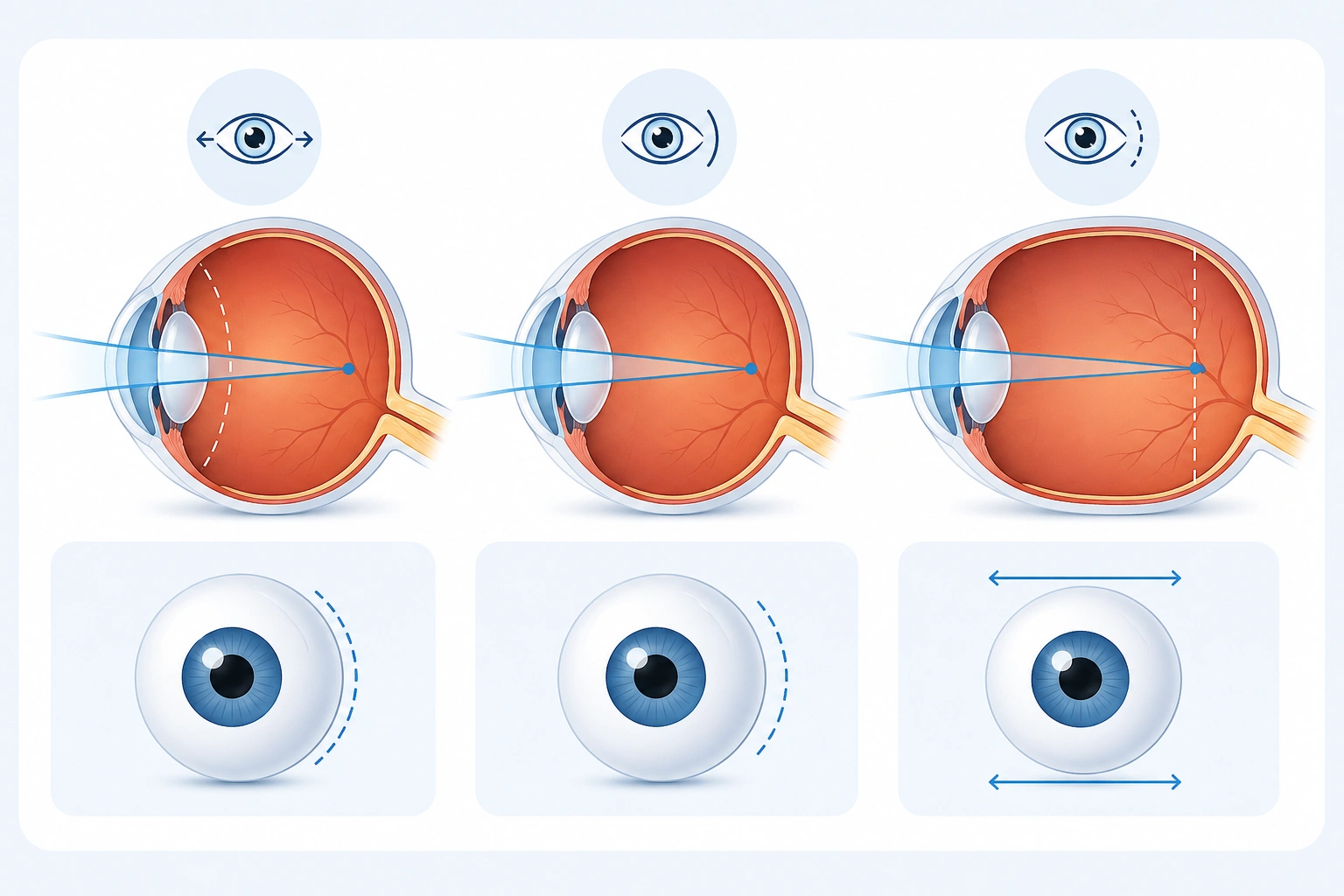
There are several mechanisms for the development of myopia, which determine the characteristics of the disease and the approach to its correction.
- Axial myopia occurs when the length of the eyeball increases. In this case, the optical system of the eye may be normal, but due to the elongation of the eyeball, the focus shifts in front of the retina. This is the most common form, especially in children and adolescents, and is most often associated with the progression of myopia.
- Refractive myopia is associated with increased refractive power of the cornea or lens. In this case, the length of the eye remains within the normal range, but the optical power of the eye is excessive, which also leads to the formation of an image in front of the retina.
- Mixed myopia combines both mechanisms: an increase in eye length and an increase in its refractive power. This form requires more careful monitoring and individualized correction.
In practice, the axial form is more common, especially during periods of active growth. Therefore, monitoring the length of the eyeball is a key parameter in the monitoring of patients with myopia.
It’s important to consider that an increase in eye length of just 1 mm can increase myopia by approximately 3 diopters. This increase directly impacts the prognosis, risk of progression, and the likelihood of retinal complications.
Degrees of Myopia
Depending on the severity of myopia, there are several levels of myopia, which reflect not only the quality of vision but also the potential risks to the ocular structures.
- Mild — up to -3.00 D
- Moderate — from -3.25 to -6.00 D
- High — more than -6.25 D
- Extreme — more than -10.00 D
As the degree of myopia increases, the strain on the ocular structures increases, and the risk of changes in the fundus increases. Even with moderate myopia, the risk of developing degenerative changes in the retina is higher compared to eyes of normal length, so it is important not only to correct vision but also to monitor the condition of the eye over time.
How does myopia manifest
Myopia develops gradually and may remain unnoticed in its early stages. The first signs are most often associated with decreased distance vision and are aggravated by prolonged visual strain.
Main symptoms:
- decreased distance vision
- need to squint
- rapid eye fatigue
- headaches with prolonged visual strain
- deterioration of vision in low light
In the early stages, symptoms may be mild and only manifest during activity, such as reading or working on a computer.
As myopia progresses, vision loss becomes more noticeable and begins to impact daily activities.
Myopia Progression
Myopia progression is a gradual increase in the degree of nearsightedness associated with changes in eye parameters, primarily its length. This process can occur at varying rates and requires regular monitoring, especially during periods of active growth.
The rate of progression is classified as follows:
- rapid – more than 1 diopter per year
- moderate – 0.5–1 diopter per year
- stable – less than 0.5 diopter per year
The rate of progression is influenced by age, visual stress, heredity, and lighting conditions.
Myopia progresses most rapidly during childhood and adolescence, so monitoring its progression is especially important during these periods.
Risks and Complications
As myopia increases, the stress on the ocular structures increases, increasing the risk of developing various complications. This primarily affects the retina, where degenerative changes, tears, and, in more severe cases, detachment can develop.
Changes in the choroid and a gradual decline in central vision are also possible, especially with high myopia. These processes develop gradually and may not cause any noticeable symptoms in the early stages.
This is why regular ophthalmological examinations are essential even in the absence of complaints, as they allow for early detection of changes and the prevention of serious complications.
Prevention and Monitoring
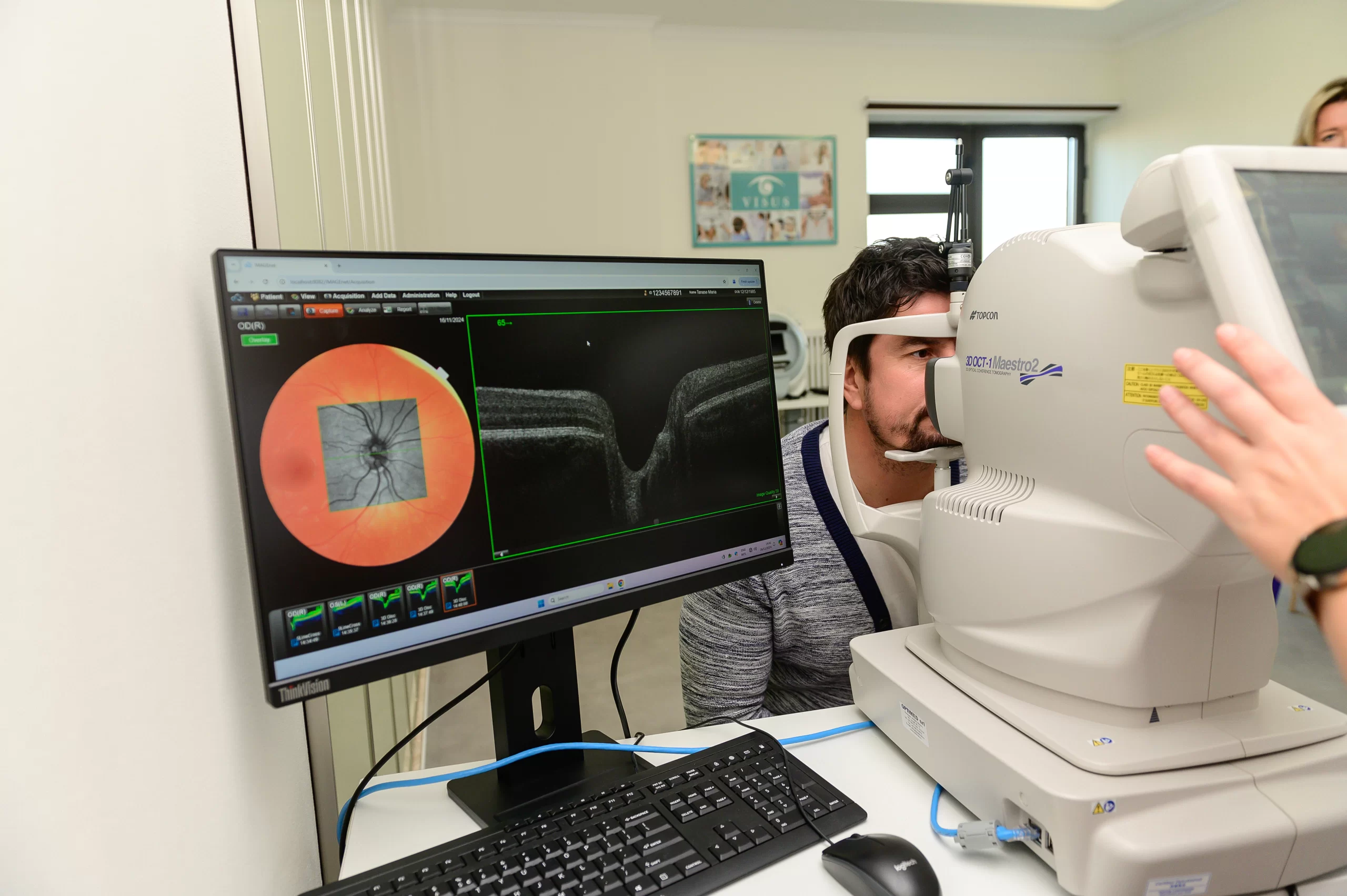
Preventing myopia and monitoring its progression play a key role in preserving vision, especially in childhood and adolescence. Most recommendations are aimed at reducing visual strain and creating conditions conducive to more physiological eye development.
Effective measures include:
- regular outdoor time
- sufficient natural light
- limiting screen time in children
- taking breaks when working at close range (every 20-30 minutes)
- changing focal length
- eye exercises
- proper nutrition
Natural light plays a key role in promoting proper visual function and reducing the risk of myopia progression.
Modern Correction Methods
Modern ophthalmology offers a wide range of myopia correction methods, which not only improve vision but also, in some cases, slow its progression. The choice of the appropriate option depends on the individual eye parameters and the specific goals that need to be achieved.
Today, a wide range of vision correction methods is available:
- glasses with individually fitted lenses
- special spectacle lenses for myopia control
- soft contact lenses
- orthokeratology (overnight) lenses
- refractive surgery
- lens replacement for refractive purposes
Each method addresses different goals, from simple correction to progression control.
The choice depends on the patient’s age, degree of myopia, lifestyle, and individual eye characteristics.
Why it’s important to start early
Timely detection of myopia and its management directly impacts the subsequent state of vision and the risk of complications. In the early stages, changes are still reversible in terms of progression, and it is during this period that the course of the disease can be most effectively addressed.
Early diagnosis allows:
- slowing the progression of myopia
- reducing the risk of complications
- maintaining high vision quality
The earlier management begins, the higher the likelihood of stabilizing the process without the need for complex or invasive interventions.
Regular examinations allow us to monitor changes, assess progress, and promptly adjust treatment strategies based on the patient’s individual needs.
Consultation at Visus Clinic
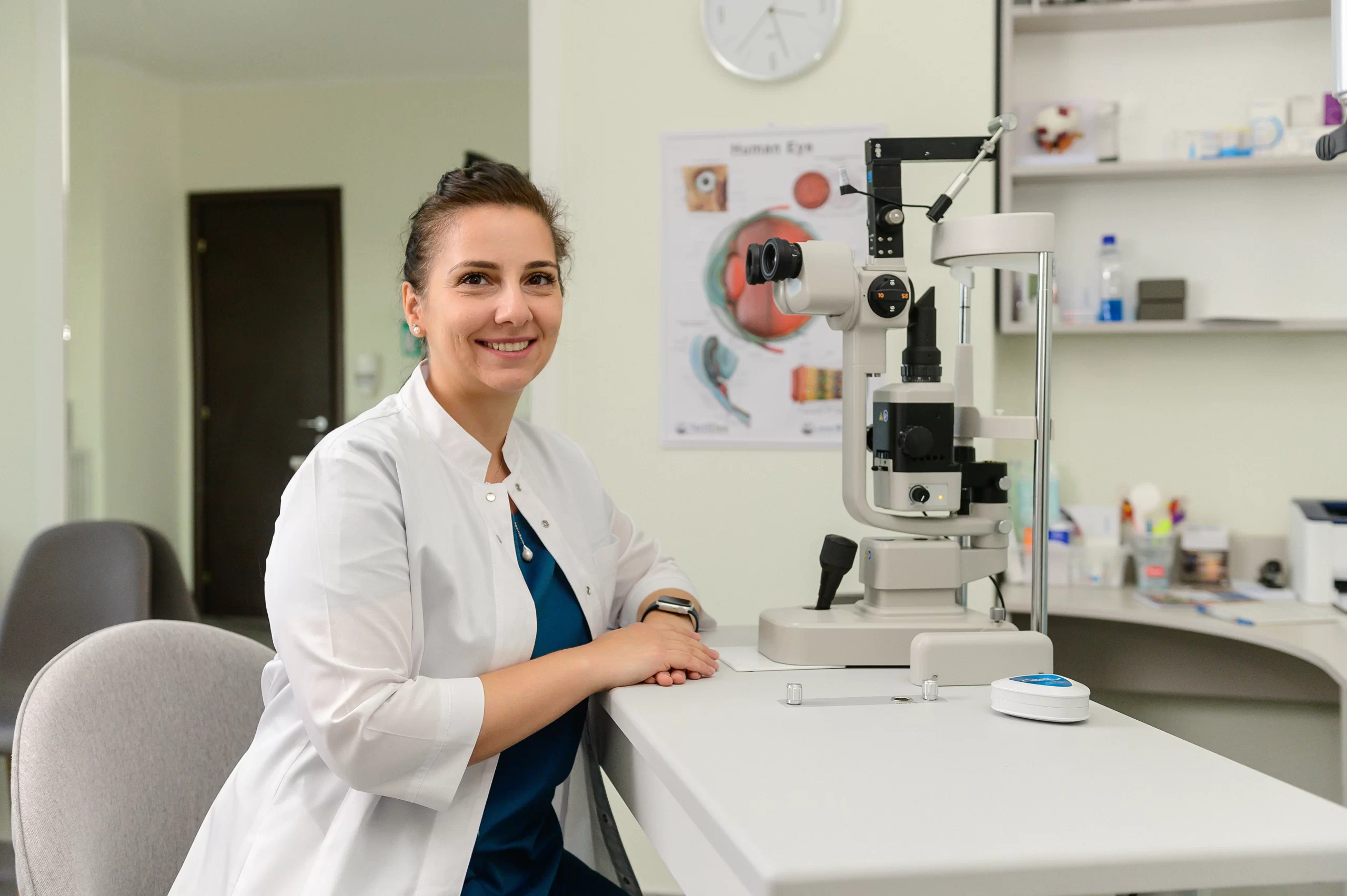
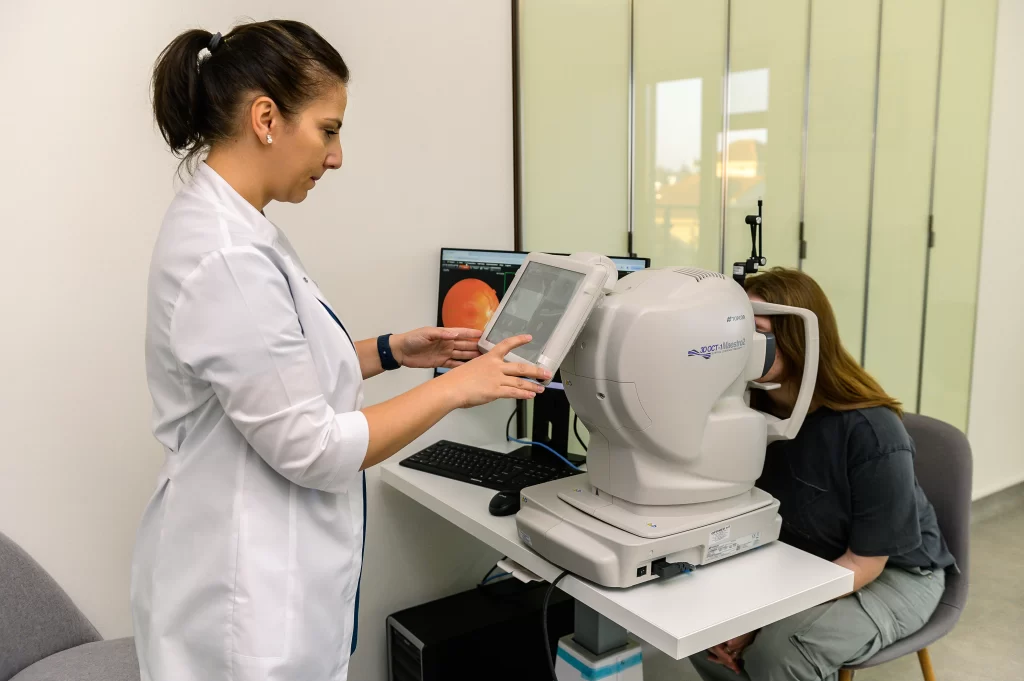
Visus Clinic offers comprehensive vision diagnostics using modern equipment, including assessment of eye length and retinal health.
We develop a personalized myopia correction and management strategy based on your age, lifestyle, and visual stress.
Our goal is not only to improve your vision but also to maintain its stability for years to come.
Schedule a consultation at Visus Clinic—we will select the optimal correction option based on all your vision needs.
Answers to Frequently Asked Questions
- Is it possible to completely cure myopia?
Modern methods allow for effective vision correction and monitoring of progression, but anatomical changes in the eye cannot be completely eliminated. - At what age should vision be checked?
Preventive examinations are recommended from an early age, especially if there is a hereditary predisposition. - Is high myopia dangerous?
Yes, with high myopia, the risk of retinal changes and other complications increases, so regular monitoring is required. - Can I use gadgets if I’m nearsighted?
Yes, but it’s important to follow a regimen: take breaks, control the time I use them, and avoid prolonged close-up work. - How often should my eyesight be checked?
If myopia is present, at least once a year, and if it progresses, more often, as recommended by a doctor. - Do vitamins help improve vision?
Vitamins support overall eye health, but they are not a substitute for vision correction or the progression of myopia.