Iridocyclitis — is an inflammation of the anterior segment of the eye that affects the iris and ciliary body. These structures are involved in nourishing the eye, producing intraocular fluid, and helping the eye focus properly, so inflammation begins to significantly affect vision and the overall condition of the eye.
Due to its high density of blood vessels, the iris is highly sensitive to inflammatory processes. Therefore, the disease often progresses rapidly and is accompanied by pronounced symptoms even in the early stages.
The inflammation affects not only the tissues of the iris but also the intraocular fluid. This causes blurred vision, discomfort, increased sensitivity to light, and a deterioration in image quality.
The disease can develop rapidly, with pronounced symptoms, or progress more gradually. In some cases, inflammation occurs only once; however, in the presence of chronic or autoimmune diseases, the process may recur periodically and require regular monitoring by an ophthalmologist.
Causes
Iridocyclitis can develop for various reasons and often occurs alongside other diseases or inflammatory processes in the body.
The main causes include:
- infections (viruses, bacteria, fungal infections, and parasitic diseases)
- eye injuries, including postoperative complications
- autoimmune diseases
- neoplastic processes
Inflammation often develops following previous infections of the throat, nose, or oral cavity. This is because infections and inflammatory processes can spread through the bloodstream and affect the eye tissues.
In cases of immune system dysfunction, iridocyclitis can develop as an autoimmune reaction. In such situations, the body begins to perceive its own eye tissues as a source of inflammation, which can cause the process to recur, persist for a long time, and become chronic.
Symptoms of the disease

Iridocyclitis usually develops rapidly and is accompanied by severe inflammation that is hard to miss. Symptoms often worsen within a short period of time and significantly affect a person’s well-being and vision.
Main symptoms:
- severe eye pain radiating to the temple or half of the head
- redness of the eye
- blurred vision
- increased sensitivity to light
- watery eyes
Most often, the inflammation affects only one eye. Many patients experience a sensation of pressure, discomfort, or heaviness in the eye.
Due to the inflammation, vision often becomes blurry, and bright light causes severe discomfort and increased pain.
These symptoms require immediate consultation with an ophthalmologist, as the inflammatory process can progress rapidly and lead to complications.
What happens during inflammation inside the eye
During inflammation, the blood vessels inside the eye become more permeable, allowing inflammatory cells and products of the immune response to enter the intraocular fluid.
Against this backdrop, the following symptoms appear:
- clouding of the intraocular fluid
- decreased transparency of the eye’s optical structures
- deterioration of visual acuity
This is precisely why patients often complain of blurred vision and a sensation of a “veil” over their eyes.
If the inflammation persists for a long time, adhesions may form between the iris and the lens. These adhesions disrupt the normal flow of intraocular fluid and can lead to increased intraocular pressure.
Without timely treatment, such changes increase the risk of complications and can negatively affect visual function.
What are the consequences of iridocyclitis
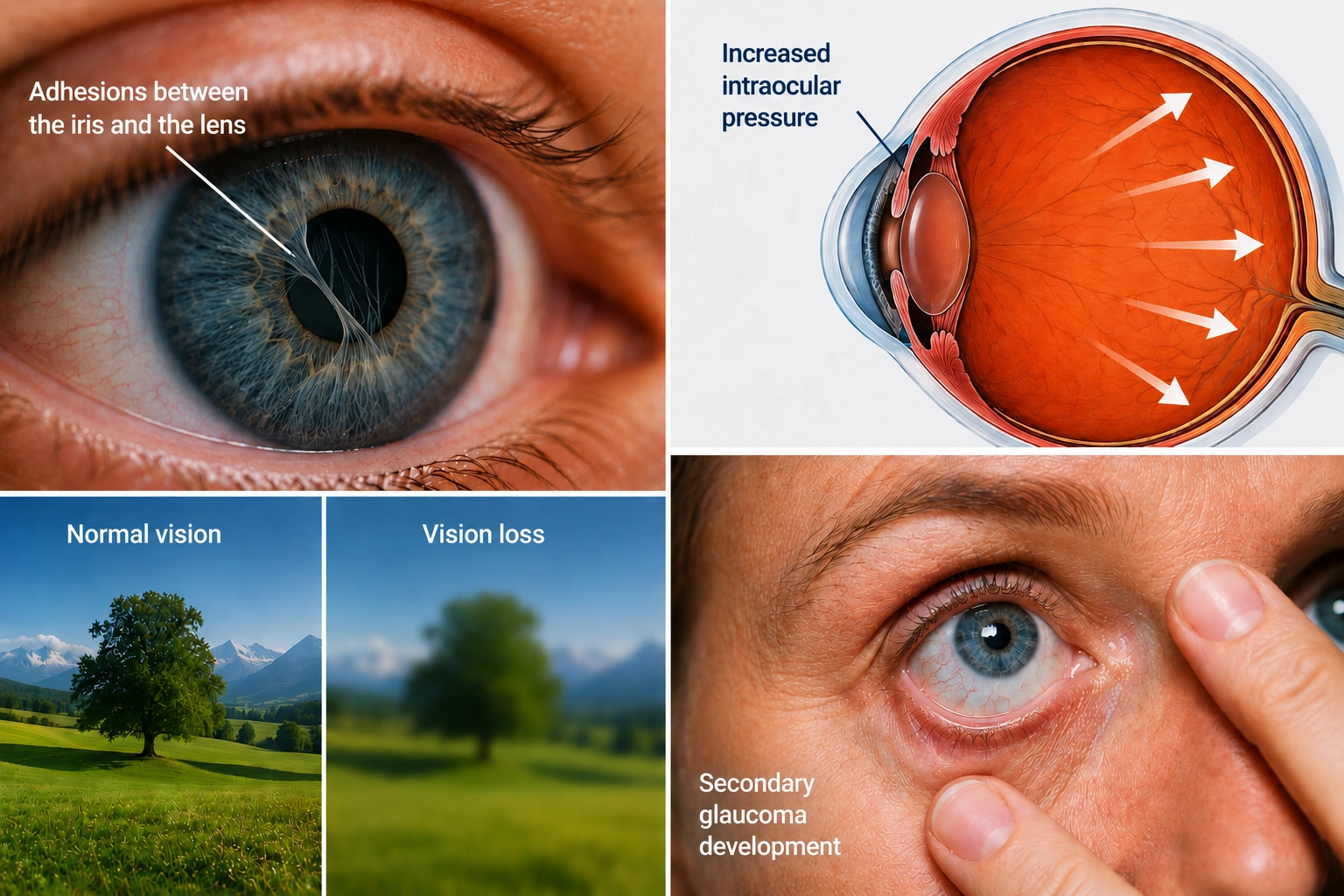
Without timely treatment, inflammation can lead to changes that begin to affect not only your well-being but also your vision.
Possible complications include:
- formation of adhesions between the iris and the lens
- increased intraocular pressure
- development of secondary glaucoma
- gradual vision loss
With prolonged or recurrent inflammation, the risk of complications increases significantly. This is why it is important not to delay seeing a doctor and to undergo treatment under the supervision of an ophthalmologist.
Timely diagnosis allows the inflammatory process to be stopped in its early stages and reduces the likelihood of permanent changes inside the eye.
What conditions may be associated with iridocyclitis
Iridocyclitis often develops not as a standalone condition, but in conjunction with other health issues. Eye inflammation may be associated with autoimmune diseases, chronic infections, or systemic inflammatory processes.
Among the most common causes:
- rheumatoid arthritis
- psoriasis
- Behçet’s disease
- viral infections (herpes, hepatitis)
- tuberculosis
- Lyme disease
- other systemic diseases
When the immune system malfunctions, the body may perceive the eye tissues as foreign. Against this backdrop, the inflammatory process begins to recur, lasts longer, and over time can become chronic, requiring regular monitoring and management.
Why it’s important not to delay examination and treatment
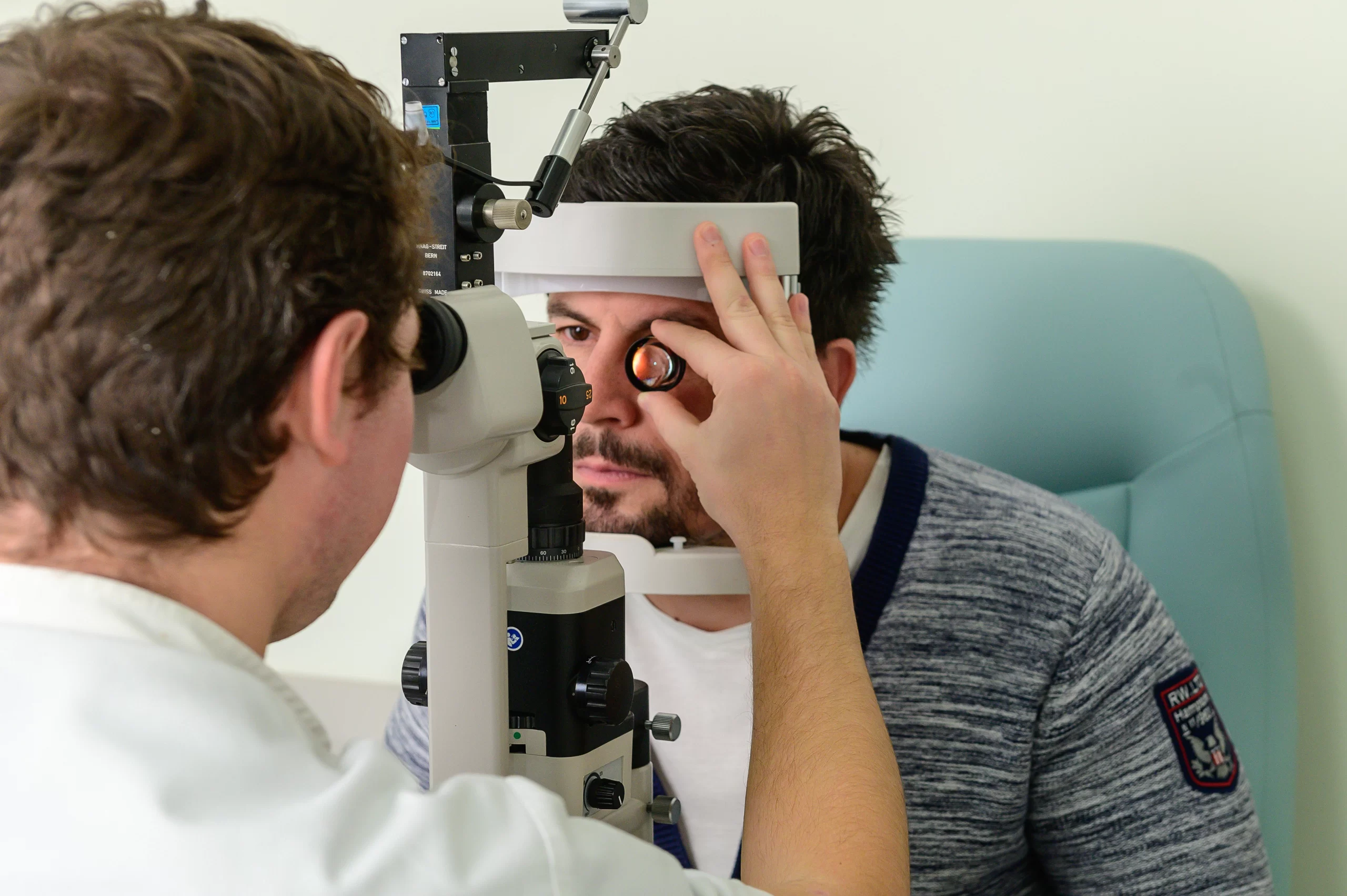
With iridocyclitis, it is important not only to quickly reduce the inflammation but also to determine its underlying cause. In some cases, the inflammatory process is associated with chronic diseases, infections, or immune system disorders.
To determine the cause, you will need to consult:
- a general practitioner
- a rheumatologist
- an infectious disease specialist
Timely examination and early treatment directly affect the prognosis and allow you to:
- stop the inflammatory process more quickly
- prevent the formation of adhesions
- reduce the risk of complications
- preserve vision
In cases of prolonged or recurrent inflammation, treatment often becomes more lengthy and requires a comprehensive approach.
That is why it is important to see an ophthalmologist as soon as possible if you experience pain, redness in the eye, or blurred vision.
Modern Treatment Methods
Treatment for iridocyclitis aims to quickly resolve inflammation, reduce pain, and prevent complications that could affect vision. The treatment plan is tailored individually and depends on the cause of the disease, the severity of the inflammatory process, and the patient’s overall condition.
The following are used in treatment:
- anti-inflammatory medications
- antibacterial or antiviral therapy
- medications that dilate the pupil and prevent the formation of adhesions
- systemic treatment for autoimmune forms of the disease
The primary goal of treatment is to stop the inflammatory process and preserve the normal function of the eye’s internal structures.
In most cases, local treatment is supplemented with systemic therapy, especially if the inflammation is associated with infections, autoimmune diseases, or other systemic disorders.
When treatment is started promptly, the inflammation can be controlled much more quickly and the risk of recurrence reduced.
Consultation at Visus Clinic

If you experience eye pain, redness, or blurred vision, it is important not to delay seeing a specialist.
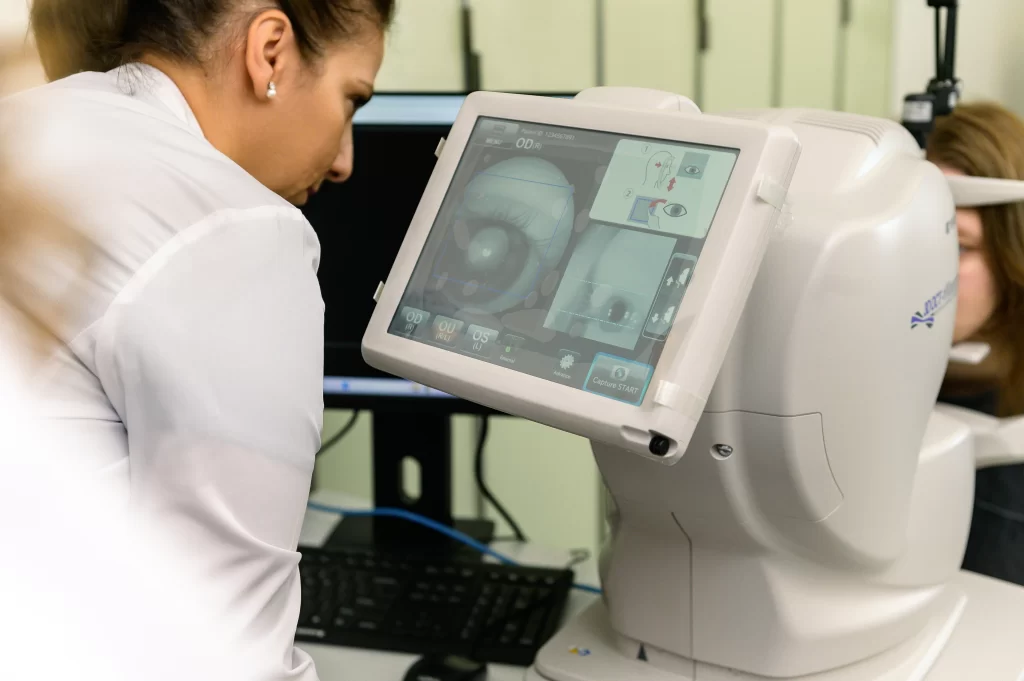
At Visus Clinic, we perform comprehensive diagnostics for inflammatory eye conditions using state-of-the-art equipment.
We identify the cause of the inflammation, assess the extent of the damage, and develop a personalized treatment plan aimed at quickly relieving symptoms and preventing complications.
Schedule a consultation at Visus Clinic — timely treatment helps preserve your vision and avoid serious consequences.
Frequently Asked Questions
- Is iridocyclitis dangerous?
Yes, without timely treatment, the inflammation can lead to complications, increased intraocular pressure, and vision loss. - Can iridocyclitis be completely cured?
In many cases, the inflammation can be successfully controlled and stopped. However, in chronic or autoimmune forms, monitoring and prevention of recurrent flare-ups are important. - Can the disease recur?
Yes, relapses are possible, especially if the inflammation is associated with systemic diseases or immune system disorders. - Is additional medical testing necessary?
Yes, this helps identify the underlying cause of the inflammation and select a more effective treatment, reducing the risk of recurrence. - When should I see a doctor immediately?
If you experience eye pain, redness, light sensitivity, or vision loss, you should see an ophthalmologist as soon as possible. - Can I self-treat?
No. Improper treatment or the use of medications without a doctor’s supervision can worsen the inflammation and increase the risk of complications.