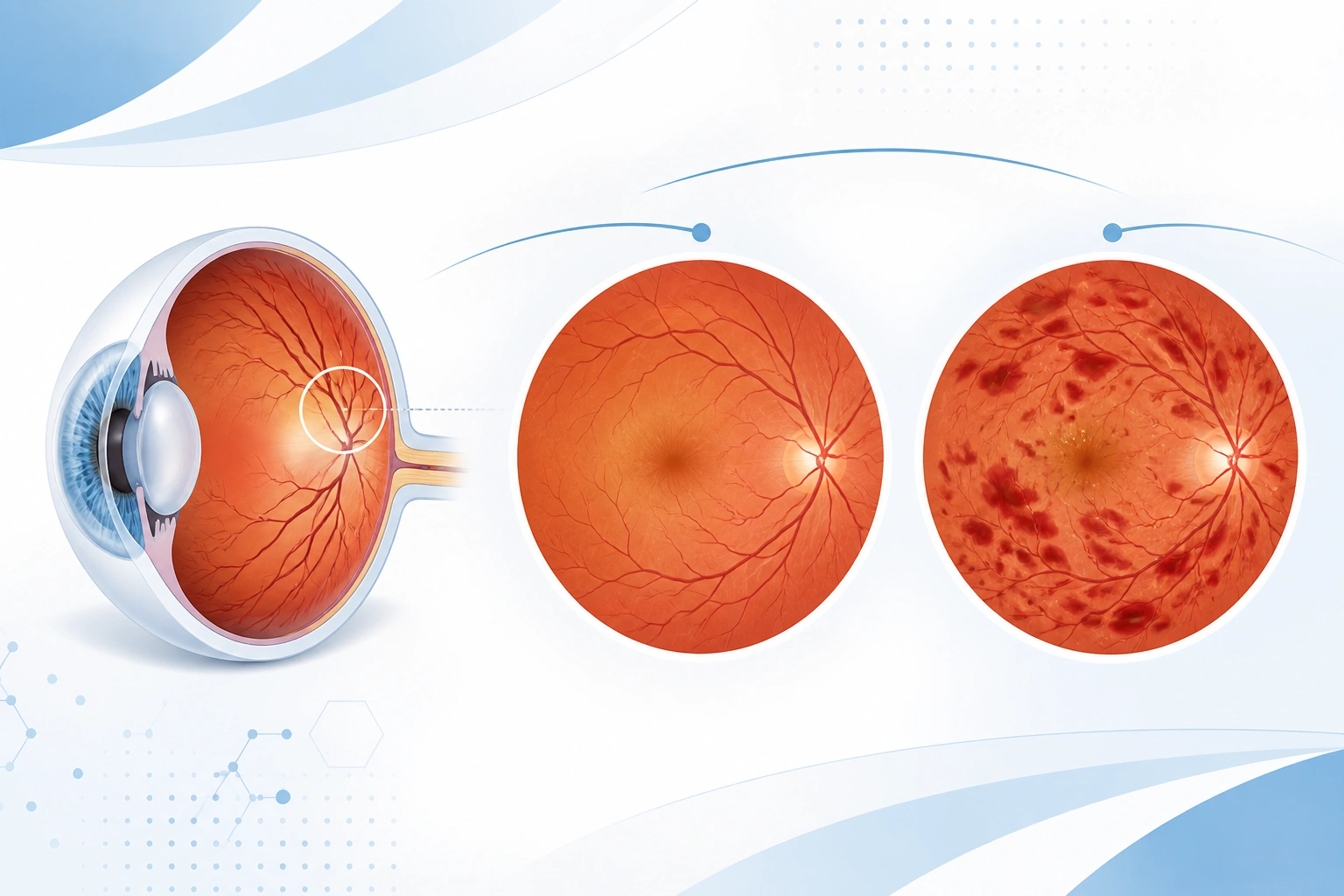
Post-thrombotic retinopathy is a complex of pathological changes in the retina that arise from impaired blood circulation, primarily the outflow of blood through the veins of the eye. This condition develops as a consequence of previous thrombosis and reflects the consequences of vascular damage at the retinal level.
The disease is caused by a vascular event—thrombosis of the central retinal vein or its branches—which leads to blood stagnation, increased pressure in the venous system, tissue swelling, and impaired nutrition. As a result, microcirculation deteriorates, capillaries are damaged, and areas with insufficient blood supply develop.
These changes can affect both the peripheral and central parts of the retina, directly impacting visual acuity and quality. When the central zone (macula) is involved, the impairment becomes most pronounced. Post-thrombotic retinopathy is not limited to localized manifestations in the eye. It often reflects the overall condition of the body’s vascular system and can be associated with systemic circulatory disorders.
Causes and Mechanisms of Development
The main causes of post-thrombotic retinopathy are conditions that impair venous outflow from the retina:
- central retinal vein thrombosis or its branches
- inflammatory changes in the blood vessels
- optic disc damage
The key mechanism is impaired venous outflow of blood from the retina. As a result, pressure in the vascular system increases, tissue edema develops, and tissue perfusion deteriorates.
Against this backdrop, microcirculation is disrupted, particularly at the capillary level, leading to the formation of areas with insufficient blood supply. Such changes can affect various areas of the retina and directly impact visual function.
Without timely treatment, the process can lead to permanent changes in the retina and vision loss.
How the disease manifests
Post-thrombotic retinal changes typically present acutely—symptoms can develop within a few hours and require prompt medical attention.
The main symptoms include:
- sudden, painless vision loss in one eye
- the appearance of a spot, darkening, or “blurring” in the field of vision
- a sensation of image distortion
- discomfort or pressure behind the eye
In some cases, short-term episodes of visual impairment may occur before the development of thrombosis, which patients often perceive as temporary eye fatigue.
The severity of symptoms directly depends on the area of retinal damage. When the central regions (macula) are involved, the visual impairment is more significant and impacts daily activities. With peripheral damage, changes may be less noticeable in the initial stages.
Risk Factors and Peculiarities in Different Age Groups
The development of retinal vascular occlusion is associated with a number of precipitating factors that can increase stress on the vascular system and impair blood flow.
These include:
- severe emotional stress
- intense physical exertion
In younger patients, episodes of thrombosis are more often associated with inflammatory changes in the vascular wall that disrupt its structure and patency. In older patients, circulatory disorders are typically associated with systemic changes, including abnormalities in the hemostatic system and vascular regulation.
This means that such conditions may be a manifestation of broader vascular disorders and are accompanied by an increased risk of serious complications, such as myocardial infarction or stroke.
Why a comprehensive examination is important
When the disease first appears, it’s important to go beyond ophthalmological treatment. Post-thrombotic retinopathy often reflects systemic circulatory disorders and therefore requires a more comprehensive approach to diagnosis.
A comprehensive examination, including a consultation with a general practitioner and hematologist, allows us to identify the underlying cause of the vascular disorder and assess the overall health of the body.
This approach is necessary to reduce the risk of recurrent thrombosis and prevent more serious vascular complications.
Post-thrombotic retinopathy is often not only a localized ocular problem but also an important signal of possible systemic changes.
Retinal Changes and Possible Complications
After a thrombosis, areas of impaired blood circulation develop in the retina. In these areas, the tissue experiences oxygen deficiency, which triggers compensatory mechanisms. In response to ischemia, the body stimulates the growth of new vessels in an attempt to restore blood flow.
However, such vessels are pathological:
- they are fragile
- prone to rupture
- and become a source of recurrent hemorrhages
This leads to an increased risk of retinal damage and gradual vision loss. Without timely treatment, the changes can progress and, in severe cases, lead to significant vision loss.
Modern Treatment Methods
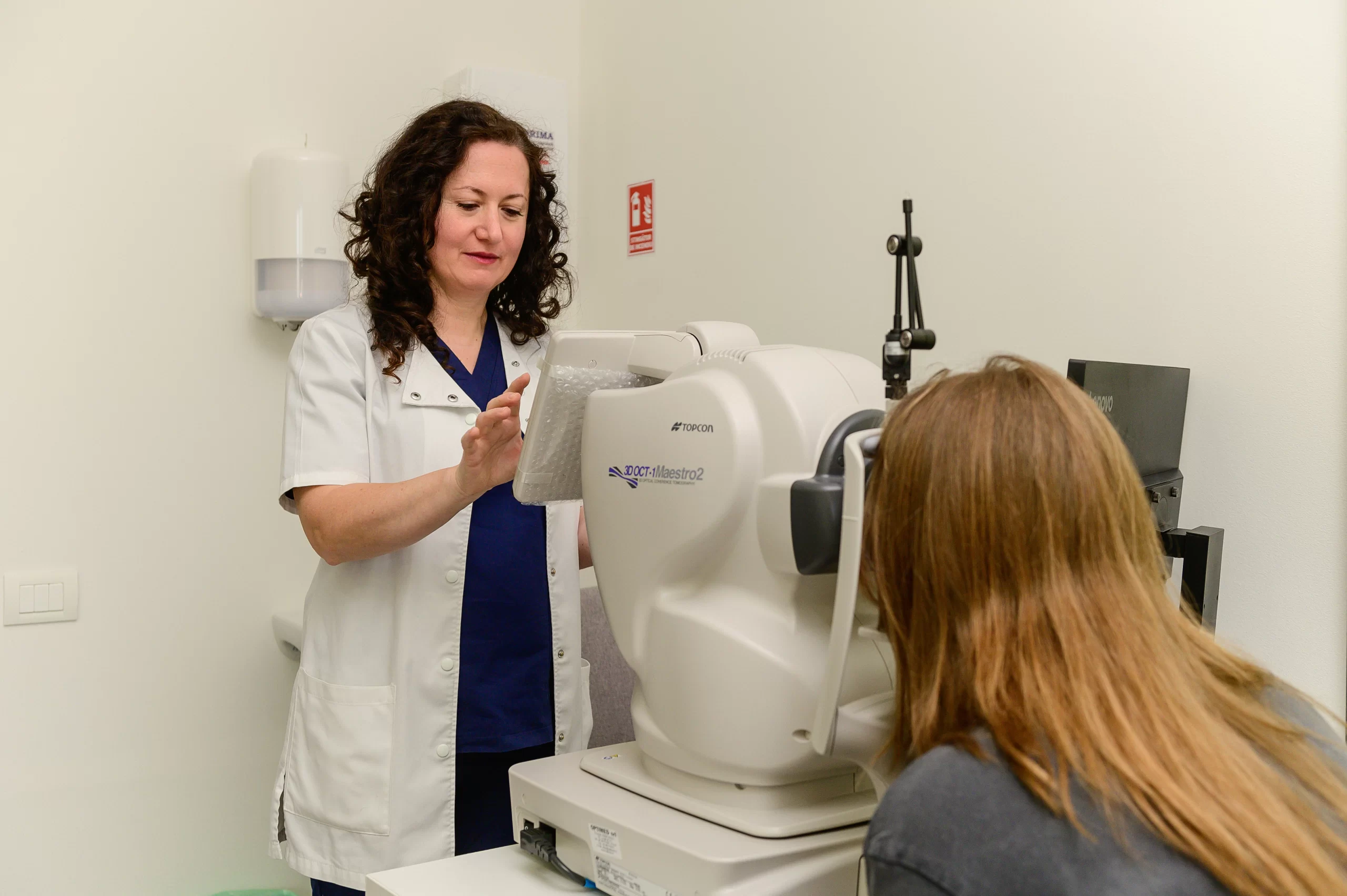
Treatment tactics are aimed at preventing complications, controlling pathological changes in the retina, and maximizing visual function preservation. The approach is always individualized based on the affected area and the severity of the changes.
1. Laser Treatment
The main goal is to identify areas of the retina with absent blood flow (ischemia) and perform laser coagulation.
This procedure allows for localized treatment of the affected areas and reduces the activity of pathological processes.
This makes it possible to:
- reduce the risk of abnormal blood vessel growth
- prevent recurrent hemorrhages
- stabilize the condition of the retina
Laser treatment is an important step in preventing complications and helps keep the disease under control.
2. Drug therapy (intravitreal therapy)
Laser treatment is not used in the central area of the retina (macula), so modern medications aimed at reducing swelling and restoring tissue function are used.
Treatment includes:
- administration of medications directly into the eye cavity
- a course of injections at specific intervals under a doctor’s supervision
The medications target the mechanisms that cause swelling and abnormal blood vessel growth, which helps achieve more stable results.
This helps to:
- reduce retinal swelling
- preserve vision
- and, in some cases, improve visual acuity
The best results are achieved with timely initiation of therapy and adherence to the recommended course of treatment.
Why is it important to start treatment on time?
Post-thrombotic retinopathy is a condition in which time plays a key role in maintaining visual function. Changes in the retina begin to form early after thrombosis, and these changes can progress rapidly if left untreated.
The earlier treatment begins:
- the higher the likelihood of preserving vision
- the lower the risk of complications
- the more effective the control of pathological processes
Timely intervention helps control swelling, stabilize the retina, and prevent the formation of abnormal vessels. This is especially important when the central zone is involved, which directly affects vision.
Delays in treatment can lead to irreversible retinal changes, decreased visual acuity, and complications that are much more difficult to correct.
Consultation and treatment in the clinic
If you suspect a circulatory disorder in the eye, it is important to consult a specialist as soon as possible. Timely diagnosis allows for an assessment of the retina’s condition and the initiation of treatment while vision can still be preserved.
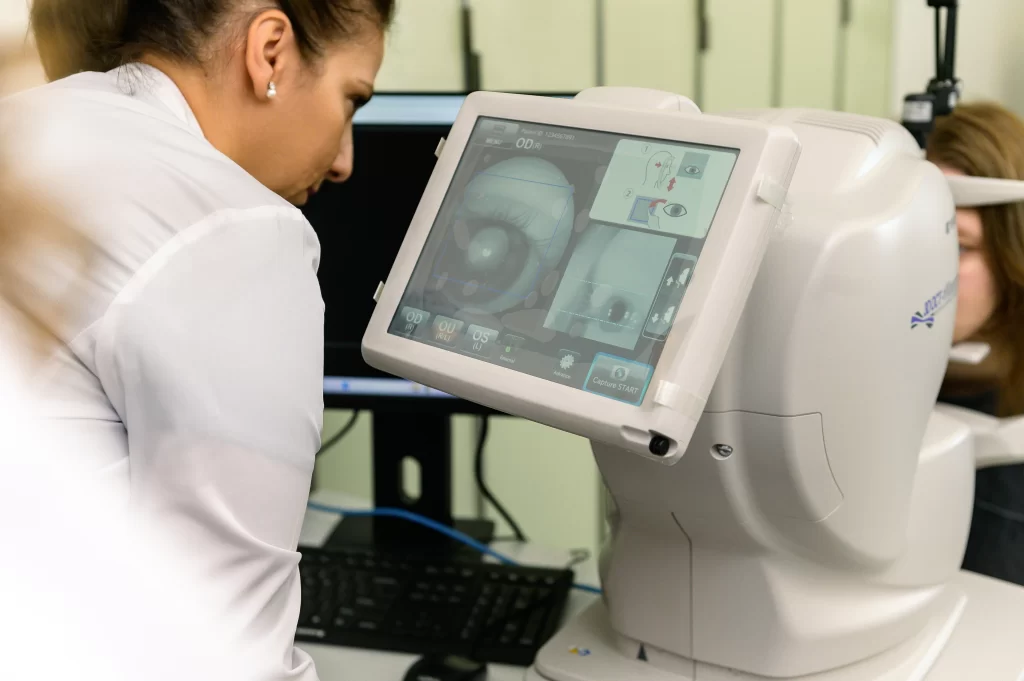
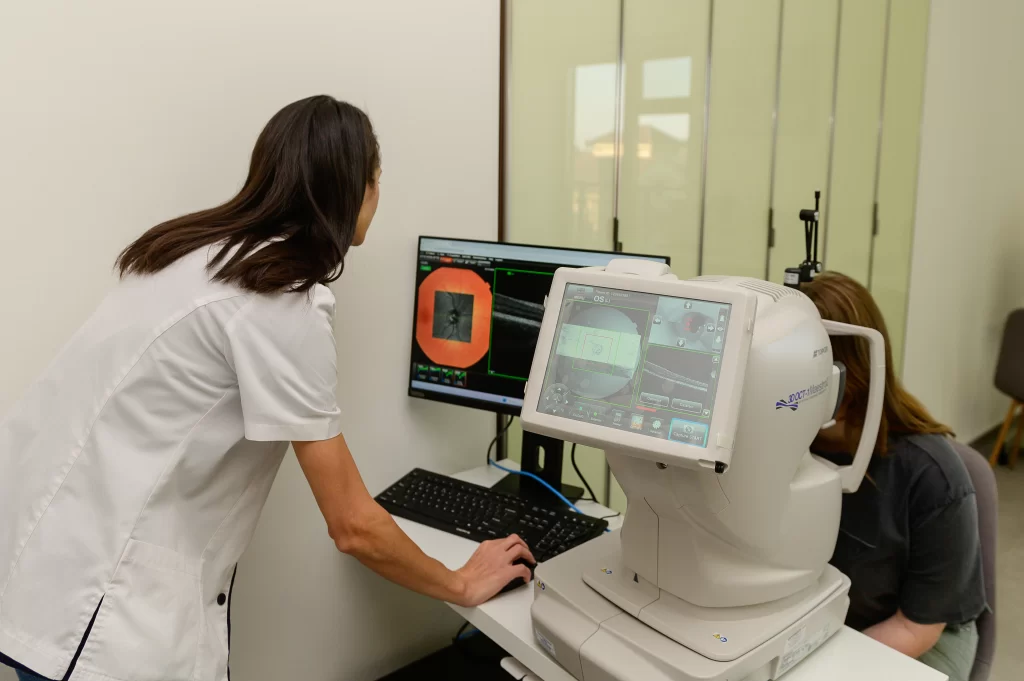
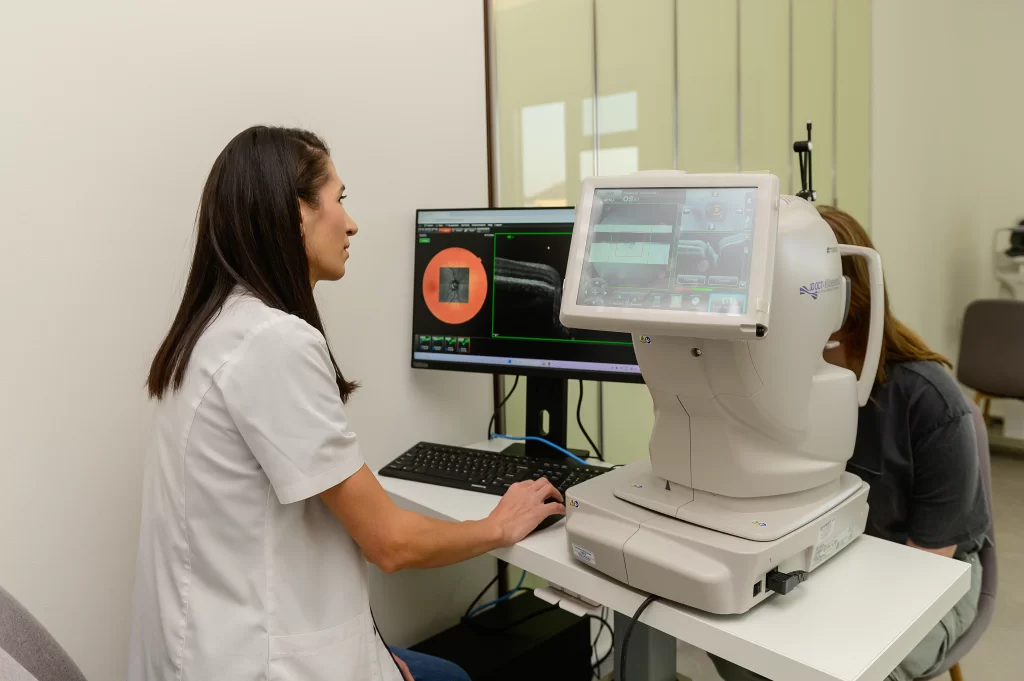
Visus Clinic offers comprehensive diagnostic services using state-of-the-art equipment, which allows us to accurately determine the nature and extent of the condition.
Diagnostics includes:
- determining the extent of retinal damage
- identifying areas of ischemia
- assessing the condition of blood vessels and the central visual field
- selecting the optimal treatment strategy
Based on the data collected, the doctor develops a personalized treatment plan that takes into account the specific characteristics of the condition, the patient’s age, and the overall health of the vascular system.
This personalized approach not only helps stabilize the condition but also preserves the best possible vision and reduces the risk of complications.
Schedule a consultation at Visus Clinic — seeing a specialist in a timely manner helps preserve your vision and avoid serious consequences.
Frequently Asked Questions
- Is this condition dangerous?
Yes, if left untreated, it can lead to significant vision loss or blindness, especially if the central part of the retina is affected. - Can vision be restored?
It depends on the extent of the damage. With timely treatment, it is possible to preserve and partially improve vision; however, in cases of severe changes, the goal is to stabilize the condition. - Can a recurrent thrombosis be prevented?
Yes, identifying the cause and managing risk factors significantly reduces the likelihood of recurrent circulatory impairment. - Is treatment necessary if vision has decreased slightly?
Yes, even a slight decrease in vision may indicate serious changes that require diagnosis and monitoring. - How quickly should I see a doctor?
If symptoms appear, it is recommended to seek medical attention as soon as possible, as the effectiveness of treatment depends directly on when therapy begins. - Is it possible to rely solely on eye drops?
Generally, no. Treatment requires a more comprehensive approach, including laser or injection methods. - How often should I have follow-up visits?
The frequency of checkups is determined on an individual basis, but during the treatment phase, follow-ups are conducted regularly to assess progress. - Can the condition affect the other eye?
This is a possibility, so it is important to monitor the condition of both eyes and the overall health of the vascular system. - When can I expect improvement?
Timelines vary and depend on the extent of the damage, but with proper treatment, positive changes are usually observed during the course of therapy.