Modern ophthalmology is increasingly focusing not only on treating existing changes but also on the gentlest possible treatment of ocular tissue. Advances in diagnostic technologies make it possible to detect retinal diseases at early stages and select more precise treatment methods.
One such approach is subthreshold micropulse laser therapy—a modern method of laser treatment for retinal diseases that stimulates tissue without causing significant damage.
This method is based on delivering ultra-short micropulses of laser light at very low power. The energy is individually tailored and remains significantly below the level that causes tissue coagulation.
The main goal of this therapy is not tissue destruction, but rather the initiation of regenerative processes within the cells of the retina and pigment epithelium.
Why is micropulse technology considered more gentle
Conventional laser methods rely on tissue coagulation, that is, the creation of controlled microdamage. While this is necessary in some cases, a particularly careful approach is required when working with the central retina.
The macular region is responsible for central vision, detail perception, and image quality. Any harsh treatment in this area can affect functionally important retinal structures.
Micropulse technology allows for a much more gentle approach:
- without significant tissue damage
- without the formation of coarse coagulates
- with minimal stress on the central retina.
For this reason, this method is considered a promising treatment option for macular pathologies.
What conditions is this method used for
Subthreshold micropulse laser therapy is used for retinal diseases associated with pigment epithelium dysfunction and changes in microcirculation in the choroid.
The method is most commonly used for:
- diabetic retinopathy
- macular edema
- postocclusive retinal changes
- central serous chorioretinopathy
- certain forms of neovascularization
In many of these conditions, metabolic disturbances within the retina develop, pigment epithelial cell function deteriorates, and fluid accumulates in the central zone.
Since the macular region is responsible for the clarity and quality of central vision, treatment in this area requires the most delicate and precise approach. This is why micropulse technology is considered one of the most gentle methods for targeting the functionally important structures of the retina.
The Role of the Retinal Pigment Epithelium
The retinal pigment epithelium is a thin but vital layer of cells located between the retina and the choroid. It ensures the normal functioning of light-sensitive cells and maintains stable metabolic processes within the retina.
The pigment epithelium performs several important functions:
- it provides nutrition to photoreceptors
- it facilitates the exchange of substances between the retina and the choroid
- it removes waste products
- it maintains stable retinal function
- it participates in the removal of excess fluid from the tissues
When these cells malfunction, metabolic processes within the retina begin to suffer. This leads to fluid accumulation, the development of edema, and a gradual deterioration in vision, especially in the central zone responsible for image clarity.
Because the retinal pigment epithelium plays a key role in the restoration and maintenance of retinal tissue, modern treatment methods are increasingly aimed not only at eliminating the symptoms of the disease but also at stimulating natural regeneration processes and restoring normal cellular function.
How does a micropulse laser work
One of the most effective micropulse therapy options is considered to be a yellow laser with a wavelength of 577 nm. This type of radiation allows for the most delicate treatment of retinal structures without significant tissue damage.
Radiation from this spectrum:
- is maximally absorbed by melanin
- selectively affects pigment epithelial cells
- minimally affects surrounding retinal tissue
A significant advantage of this method is the absence of significant impact on the xanthophyllic pigment in the macular area. This is especially important when treating the central areas of the retina, which are responsible for clarity and quality of vision.
Subthreshold micropulse therapy does not cause a harsh coagulating effect, but rather stimulates natural regenerative processes within cells.
Laser therapy:
- activates pigment epithelial cells
- improves intracellular metabolism
- enhances cellular pumping function
- stimulates regeneration processes
- reduces fluid accumulation in retinal tissue
As a result, the severity of edema is reduced, the activity of the pathological process is reduced, and conditions are created for stabilizing the retina.
How is the procedure performed

No special preparation is usually required before treatment. Before the procedure, the retina is examined and individual laser treatment parameters are selected, taking into account the characteristics of the individual eye and the nature of the changes.
The procedure is performed:
- outpatient
- quickly
- painlessly
- under local drop anesthesia
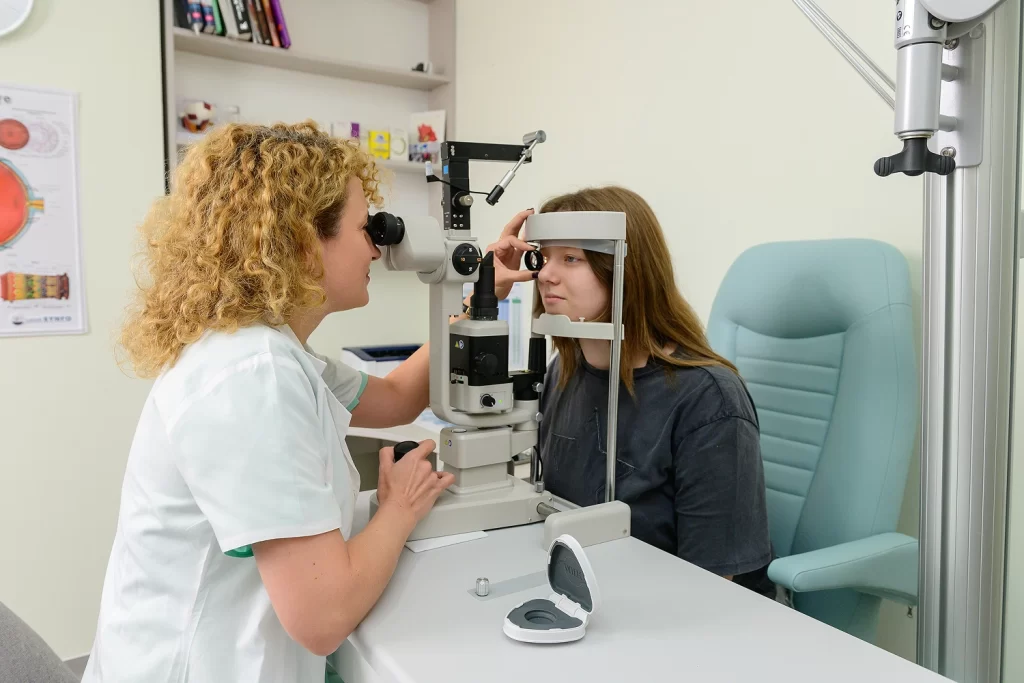
During treatment, the patient is seated, and a special contact lens is placed on the eye, allowing the doctor to precisely focus the treatment on the desired area of the retina. Flashes of light may be noticeable during the procedure, but significant discomfort is usually not experienced.
The procedure itself takes a few minutes. After completion, the patient can typically return to their normal activities the same day, with no lengthy recovery period.
Is repeat treatment necessary
The duration of the effect depends on:
- the type of disease
- the degree of retinal changes
- the activity of the pathological process
- the tissue response to the treatment
In some patients, the results last for several weeks, while in others, they last significantly longer. Chronic retinal diseases sometimes require dynamic monitoring and control of the macular area.
Due to the gentle nature of the treatment, micropulse technology can be repeated after a certain period of time, if necessary, without causing significant damage to the retinal tissue.
Advantages of Micropulse Laser Therapy
The main advantages of this method include:
- absence of significant tissue damage
- the ability to treat the central area of the retina
- minimal trauma
- rapid recovery
- the ability to repeat the procedure
- good treatment tolerance
Unlike traditional coagulation techniques, micropulse therapy does not destroy tissue, but rather stimulates natural regenerative processes within pigment epithelial cells.
It is this combination of safety, gentle application, and the ability to treat functionally significant areas of the retina that makes micropulse laser therapy one of the most promising modern approaches to treating retinal diseases.
Consultation and Treatment at Visus Clinic

Visus Clinic offers state-of-the-art diagnostics for retinal diseases and the selection of a personalized treatment plan tailored to each patient’s needs and the nature of macular changes.
During the examination, the condition of the retina, the presence of edema, and the activity of the pathological process are assessed, and the suitability of micropulse laser therapy is determined.
We use modern diagnostic technologies and the most gentle treatment methods, allowing us to carefully treat the functionally important structures of the eye and preserve vision.
Schedule a consultation at Visus Clinic to undergo a retinal diagnostic and determine the optimal treatment option using modern micropulse laser technologies.
Answers to frequently asked questions
Is the procedure painful?
No. The treatment is performed under local anesthesia and is generally well tolerated by patients.
Is hospitalization required?
No. The procedure is performed on an outpatient basis and does not require hospitalization.
Can I return to my normal life after the treatment?
Yes, in most cases, patients return to their normal activities on the day of the procedure.
Does the micropulse laser damage the retina?
This method is a gentle technology and aims to stimulate cells without causing significant tissue damage.
Can the treatment be repeated?
Yes, the procedure can be repeated if necessary.